
As the coronavirus pandemic steamrolled everything about life as we once knew it, it changed the field of medicine arguably more than anything else.
Digital health, or telemedicine, which was a fledgling concept, grew quickly out of necessity. In the quest to slow down the spread, gone were the days of sitting in a packed waiting room, people sniffling and sneezing left and right.
Even though we put off routine well-visits or non-essential surgeries, there were still medical issues that some patients needed addressed immediately, whether it was COVID-related or not. But for many, it was still safer to stay home.
Enter the “virtual visit.” Prior to the pandemic, these remote doctor/patient meetings were rarely used. When they were, it was primarily for urgent care circumstances. Then suddenly, health care practitioners were forced to embrace telehealth, chatbots and all the other new tools that were necessary to provide health care during the crisis.
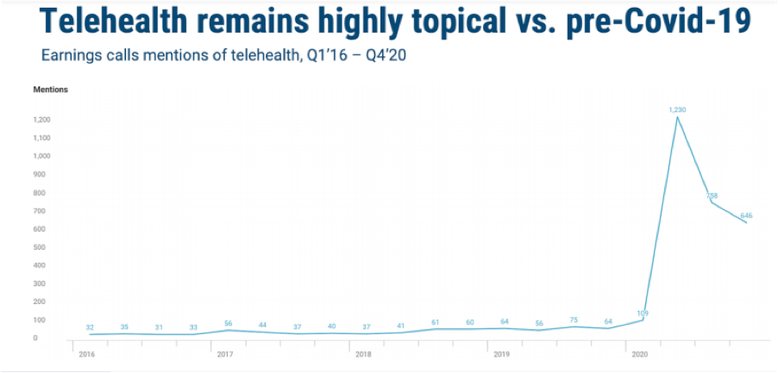
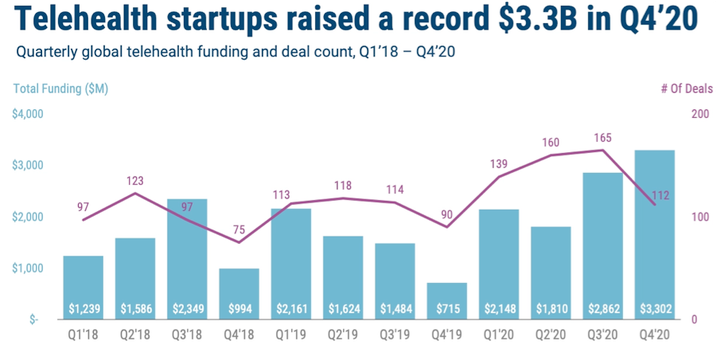
The industry has exploded over the past year and it’s not expected to slow down. Virtual care options will expand while integrating further with in-person care. This year, global healthcare industry revenues are expected to exceed $2.6 trillion by 2025, up from $2 trillion last year, with the majority of that growth propelled by artificial intelligence and telehealth, according to consultancy Frost & Sullivan. Telehealth startups raised a record $3.3 billion in Q4 ’20, recognizing the opportunities available to those looking to get into this growing business.
One emerging trend as a result of this upheaval is that medicine is becoming more predictive and proactive, as opposed to reactive. Connected devices, both at the consumer level and clinical grade, will become more common, helping physicians get real-time data from patients to better monitor their health status, making interventions more “timely and more context-aware,” said Thomas Keisau, director and digital health leader with advisory firm The Chartis Group.
Along with greater use of wearables, artificial intelligence is also going to be a key part of the change. It has the potential to transform clinical trials, drug discovery, administrative processes and maybe even illness diagnosis. With the advent of the cloud, which allows organizations to ingest and analyze large amounts of data, AI could help drive major insights in care while saving the industry a lot of money. According to a 2019 Optum survey, senior health executives plan to spend almost $40 million over the next five years on AI-related projects, compared to an estimated $32.7 million in 2018. However, we may also see a backlash in this area as some may be wary of machines and algorithms making healthcare decisions.
Telehealth and telemedicine will continue to pervade the industry, as more patients seek healthcare from home and more healthcare professionals trust the new applications. Expect to see more advanced automated screening, triage and routine care use cases. Chatbots will help gather health history information and assess symptoms to streamline appointments for physicians. We could even see hospital-at-home for more serious and chronic cases, which could ease the load on overcrowded hospitals.
Virtual care will also continue to increase access and interest in previously niche fields, like women’s health and telemental health. Last year was a big year for both fields, with mental health seeing a record high of equity funding accelerating in the fourth quarter, and women’s health companies reporting a record number of deals, according to CB Insights.
All this new technology and sharing of data inevitably comes with the threat of cyber attacks and breaches of privacy. Telehealth providers reported a huge increase in targeted attacks last year as adoption skyrocketed. Reported data breaches in the U.S. healthcare sector increased by almost three times last year, per HHS data,with malicious actors targeting the industry as it struggled to respond to COVID. Experts especially worry that hackers will target COVID-19 contact tracing apps, meant to track and minimize the spread of the virus. They don’t employ sufficient security protections, making it easy for hackers to gain access to private information. Healthcare companies will invest large amounts of money in the coming years to combat this issue.
As the world continues to grapple with the pandemic, virtual care will continue to grow in scope to help people stay safe and healthy. Even after the pandemic is under control, innovations in digital health will continue.